This website has moved to http://sites.google.com/a/bohnert.eu/fabian-bohnert/.
Please navigate to the new location to access the latest version of this website.
Dr Fabian Bohnert
Dipl.-Math. oec., Ph.D., Research FellowClayton School of Information Technology
Faculty of Information Technology
Monash University, Clayton, VIC 3800
Australia
phone: +61 3 9905 5207
email: fabian.bohnert [AT] monash.edu
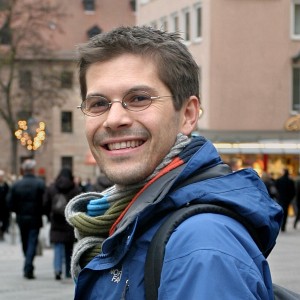
Short biography
Dr Fabian Bohnert is a research fellow at Monash University (Melbourne, Australia). His current research is based in the fields of user modelling and personalisation. He is particularly interested in adaptive statistical techniques for user modelling and recommendation generation in physical spaces with organised information. Fabian holds a Ph.D. from Monash University (Melbourne, Australia), and a Diplom in econo-mathematics (eq. master in econo-mathematics) from Ulm University (Ulm, Germany) with majors data mining and actuarial studies. When undertaking his Diplom thesis and during internships in industry, his research involved probabilistic predictive data modelling and data mining.

Research interests
Visitors to physical educational environments, such as museums, galleries or zoos, are often overwhelmed by the information available in the space they are exploring. Typically being limited in receptivity and time, they are confronted with the challenge of finding and selecting the personally interesting items to view within the available time. Mobile technology, such as mobile electronic handheld guides, can provide guidance and support a visitor in this selection process by identifying and recommending items that match his/her interests. However, recommendation generation from non-intrusive observations of a visitor's behaviour in physical spaces has challenges of its own. Factors such as the spatial layout of the environment and suggested order of item access must be taken into account, as they constrain the recommendation process. I am investigating adaptive user modelling and personalisation approaches that consider such and other constraints.
My Ph.D. supervisors were Prof Ingrid Zukerman (Monash University) and Prof Liz Sonenberg (The University of Melbourne).
I am a member of the User Modeling and Natural Language Group (UMNL) chaired by Prof Ingrid Zukerman, which is affiliated with the Centre for Research in Intelligent Systems (CRIS). The UMNL group conducts research in the areas of user modelling and natural language processing, focusing on statistical and machine learning techniques.
Additionally, I was involved in the Kubadji Project. The project developed user modelling and language techniques to support the creation of personalised mobile technology for museums. Key processes under investigation were (1) the inference of a visitor's interests and activities from non-intrusive observations of his/her behaviour in the physical museum space, (2) the recommendation of items of interest, and (3) the personalisation of the content delivered for these items.
I was a member of the ARC Research Network in Human Communication Science (HCSNet), the ARC Research Network in Enterprise Information Structure (EII), and the EII Taskforce on Context-Aware Computing.
Publications [pdf]
Refereed book chapters
- Blair Bethwaite, David Abramson, Fabian Bohnert, Slavisa Garic, Colin Enticott, and Tom Peachey:
"Mixing Grids and Clouds: High-Throughput Science Using the Nimrod Tool Family".
In: Nick Antonopoulos and Lee Gillam (eds.): Cloud Computing: Principles, Systems and Applications,
Springer-Verlag London, ISBN 978-1-84996-240-7, Chapter 13, pages 219–237, 2010.
[abstract +/-]
[bibtex]
 The Nimrod tool family facilitates high-throughput science by allowing researchers to explore complex design spaces using computational models. Users are able to describe large experiments in which models are executed across changing input parameters. Different members of the tool family support complete and partial parameter sweeps, numerical search by non-linear optimisation and even workflows. In order to provide timely results and to enable large-scale experiments, distributed computational resources are aggregated to form a logically single high-throughput engine. To date, we have leveraged grid middleware standards to spawn computations on remote machines. Recently, we added an interface to Amazon's Elastic Compute Cloud (EC2), allowing users to mix conventional grid resources and clouds. A range of schedulers, from round-robin queues to those based on economic budgets, allow Nimrod to mix and match resources. This provides a powerful platform for computational researchers, because they can use a mix of university-level infrastructure and commercial clouds. In particular, the system allows a user to pay money to increase the quality of the research outcomes and to decide exactly how much they want to pay to achieve a given return. In this chapter, we will describe Nimrod and its architecture, and show how this naturally scales to incorporate clouds. We will illustrate the power of the system using a case study and will demonstrate that cloud computing has the potential to enable high-throughput science.
Refereed journal articles
- Petteri Nurmi, Antti Salovaara, Andreas Forsblom, Fabian Bohnert, and Patrik Floréen:
"PromotionRank: Ranking and Recommending Grocery Product Promotions Using Personal Shopping Lists".
In ACM Transactions on Interactive Intelligent Systems (TIIS),
2014.
Accepted for publication.
[abstract +/-]
[bibtex]
We present PromotionRank, a technique for generating a personalized ranking of grocery product promotions based on the contents of the customer's personal shopping list. PromotionRank consists of four phases. First, information retrieval techniques are used to map shopping list items onto potentially relevant product categories. Second, since customers typically buy more items than what appear on their shopping lists, the set of potentially relevant categories is expanded using collaborative filtering. Third, we calculate a rank score for each category using a statistical interest criterion. Finally, the available promotions are ranked using the newly computed rank scores. To validate the different phases, we consider twelve months of anonymized shopping basket data from a large national supermarket. To demonstrate the effectiveness of PromotionRank, we also present results from two user studies. The first user study was conducted in a controlled setting using shopping lists of different lengths, whereas the second study was conducted within a large national supermarket using real customers and their personal shopping lists. The results of the two studies demonstrate that PromotionRank is able to identify promotions that are considered both relevant and interesting. As part of the second study, we used PromotionRank to identify relevant promotions to advertise and measure the influence of the advertisements on purchases. The results of this evaluation indicate that PromotionRank is also capable of targeting advertisements, improving sales compared to a baseline that selects random advertisements.
- Yanir Seroussi, Ingrid Zukerman, and Fabian Bohnert:
"Authorship Attribution with Topic Models".
In Computational Linguistics (COLI),
2014.
Accepted for publication.
[abstract +/-]
[web]
[pdf]
[doi]
[bibtex]
Authorship attribution deals with identifying the authors of anonymous texts. Traditionally, research in this field has focused on formal texts, such as essays and novels, but recently more attention has been given to texts generated by online users, such as emails and blogs. Authorship attribution of such online texts is a more challenging task than traditional authorship attribution, because such texts tend to be short, and the number of candidate authors is often larger than in traditional settings. We address this challenge by employing topic models to obtain author representations. In addition to exploring novel ways of applying two popular topic models to this task, we test our new model that projects authors and documents to two disjoint topic spaces. Employing our model in authorship attribution yields state-of-the-art performance on several datasets, containing either formal texts written by a few authors or informal texts generated by tens to thousands of online users. We also present experimental results that demonstrate the tens to thousands of online users. We also present experimental results that demonstrate the polarity of texts, and predicting the ratings that users would give to items such as movies.
- Fabian Bohnert and Ingrid Zukerman:
"Personalised Viewing-Time Prediction in Museums".
In User Modeling and User-Adapted Interaction (UMUAI),
2014.
Accepted for publication.
[abstract +/-]
[doi]
[bibtex]
People are often overwhelmed by the large amount of information provided in museum spaces, which makes it difficult for them to select exhibits of potential interest. As a first step in recommending exhibits where a visitor may wish to spend some time, this article investigates predictive user models for personalised prediction of museum visitors' viewing times at exhibits. We consider two content-based models and a nearest-neighbour collaborative filter, and develop a collaborative model based on the theory of spatial processes which relies on a notion of distance between exhibits. We discuss models of exhibit distance derived from viewing-time similarity, semantic similarity and walking distance. The results from our evaluation with a real-world dataset of visitor pathways collected at Melbourne Museum (Melbourne, Australia) suggest that utilising walking and semantic distances between exhibits enables more accurate predictions of a visitor's viewing times of unseen exhibits than using distances derived from observed exhibit viewing times. Our results also show that all models outperform a non-personalised baseline, that content-based viewing time prediction yields better results than nearest-neighbour collaborative prediction, and that our collaborative model based on spatial processes attains the highest predictive accuracy overall.
- Melanie F. Larizza, Ingrid Zukerman, Fabian Bohnert, Lucy Busija, Sharon A. Bentley, R. Andrew Russell, and Gwyneth Rees:
"In-Home Monitoring of Older Adults with Vision Impairment: Exploring Patients', Caregivers' and Professionals' Views".
In Journal of the American Medical Informatics Association 21(1) (JAMIA),
pages 56–63, 2014.
[abstract +/-]
[web]
[web]
[pdf]
[doi]
[bibtex]
Objective To develop a conceptual framework for the design of an in-home monitoring system (IMS) based on the requirements of older adults with vision impairment (VI), informal caregivers and eye-care rehabilitation professionals.
Materials and Methods Concept mapping, a mixed-methods statistical research tool, was used in the construction of the framework. Overall, 40 participants brainstormed or sorted and rated 83 statements concerning an IMS for older adults with VI. Multidimensional scaling and hierarchical cluster analysis were employed to construct the framework. A questionnaire yielded further insights into the views of a wider sample of older adults with VI (n=78) and caregivers (n=25) regarding IMS.
Results Concept mapping revealed a nine-cluster model of IMS-related aspects including affordability, awareness of system capabilities, simplicity of installation, operation and maintenance, system integrity and reliability, fall detection and safe movement, user customization, user preferences regarding information delivery, and safety alerts for patients and caregivers. From the questionnaire, independence, safety and fall detection were the most commonly reported reasons for older adults and caregivers to accept an IMS. Concerns included cost, privacy, security of the information obtained through monitoring, system accuracy, and ease of use.
Discussion Older adults with VI, caregivers and professionals are receptive to in-home monitoring, mainly for fall detection and safety monitoring, but have concerns that must be addressed when developing an IMS.
Conclusion Our study provides a novel conceptual framework for the design of an IMS that will be maximally acceptable and beneficial to our ageing and vision-impaired population.
- Karl Grieser, Timothy Baldwin, Fabian Bohnert, and Liz Sonenberg:
"Using Ontological and Document Similarity to Estimate Museum Exhibit Relatedness".
In ACM Journal on Computing and Cultural Heritage 3(3) (JOCCH),
pages 10:1–10:20, 2011.
[abstract +/-]
[pdf]
[bibtex]
 Exhibits within cultural heritage collections such as museums and art galleries are arranged by experts with intimate knowledge of the domain, but there may exist connections between individual exhibits that are not evident in this representation. For example, the visitors to such a space may have their own opinions on how exhibits relate to one another. In this article, we explore the possibility of estimating the perceived relatedness of exhibits by museum visitors through a variety of ontological and document similarity-based methods. Specifically, we combine the Wikipedia category hierarchy with lexical similarity measures, and evaluate the correlation with the relatedness judgements of visitors. We compare our measure with simple document similarity calculations, based on either Wikipedia documents or Web pages taken from the Web site for the museum of interest. We also investigate the hypothesis that physical distance in the museum space is a direct representation of the conceptual distance between exhibits. We demonstrate that ontological similarity measures are highly effective at capturing perceived relatedness and that the proposed RACO (Related Article Conceptual Overlap) method is able to achieve results closest to relatedness judgements provided by human annotators compared to existing state-of-the-art measures of semantic relatedness.
 - Fabian Bohnert, Ingrid Zukerman, Shlomo Berkovsky, Timothy Baldwin, and Liz Sonenberg:
"Using Interest and Transition Models to Predict Visitor Locations in Museums".
In AI Communications 21(2-3) (AICom) – Special Issue on Recommender Systems,
pages 195–202, 2008.
[abstract +/-]
[pdf]
[bibtex]
 Museums offer vast amounts of information, but a visitor's receptivity and time are typically limited, providing the visitor with the challenge of selecting the (subjectively) interesting exhibits to view within the available time. Mobile, electronic handheld guides offer the opportunity to improve a visitor's experience by recommending exhibits of interest, and adapting the delivered content. The first step in this personalisation process is the prediction of a visitor's activities and interests. In this paper we study non-intrusive, adaptive user modelling techniques that take into account the physical constraints of the exhibition layout. We present two collaborative models for predicting a visitor's next locations in a museum, and an ensemble model that combines the predictions of these models. The three models were trained and tested on a small dataset of museum visits. Our results are encouraging, with the ensemble model yielding the best performance overall.
Refereed conference proceedings
- Fabian Bohnert, Ingrid Zukerman, and Junaidy Laures:
"GECKOmmender: Personalised Theme and Tour Recommendations for Museums".
In Proceedings of the 20th International Conference on User Modeling, Adaptation, and Personalization (UMAP-12),
pages 26–37, Montreal, Canada, 2012.
[abstract +/-]
[bibtex]
We present GECKOmmender, a mobile system for personalised theme and tour recommendations in museums, based on a digital site-map representation. Star ratings provided by visitors for seen exhibits are used to predict ratings for unvisited exhibits. The predicted ratings in turn form the basis for recommendations. These recommendations are presented in one of three display modes: StarMap – stars on the site map, HeatMap – colours from green to red that indicate the interestingness of exhibits (from interesting to not interesting respectively), and TourPlan – directed personalised tours through the museum. GECKOmmender was evaluated in a field study at Melbourne Museum (Melbourne, Australia). Our results show that (1) most participants enjoyed GECKOmmender, (2) GECKOmmender's recommendations often reflected the participants' personal interests, and (3) HeatMap was the most popular display mode.
- Fabian Bohnert, Ingrid Zukerman, and David W. Albrecht:
"Realistic Simulation of Museum Visitors' Movements as a Tool for Assessing Sensor-Based User Models".
In Proceedings of the 20th International Conference on User Modeling, Adaptation, and Personalization (UMAP-12),
pages 14–25, Montreal, Canada, 2012.
[abstract +/-]
[bibtex]
We present a realistic simulation framework to examine the impact of sensor noise on the performance of user models in the museum domain. Our contributions are (1) models to simulate noisy visit trajectories as time-stamped sequences of (x, y) positional coordinates which reflect walking and hovering behaviour; (2) a discriminative inference model that distinguishes between hovering and walking on the basis of (simulated) noisy sensor observations; (3) a model that infers viewed exhibits from hovering coordinates; and (4) a model that predicts the next exhibit on the basis of inferred (rather than known) viewed exhibits. Our staged evaluation assesses the effect of these models (in combination with sensor noise) on inferential and predictive performance, thus shedding light on the reliability attributed to inferences drawn from sensor observations.
- Melanie F. Larizza, Ingrid Zukerman, Fabian Bohnert, R. Andrew Russell, Lucy Busija, David W. Albrecht, and Gwyn Rees:
"Studies to Determine User Requirements Regarding In-Home Monitoring Systems".
In Proceedings of the 20th International Conference on User Modeling, Adaptation, and Personalization (UMAP-12),
pages 139–150, Montreal, Canada, 2012.
[abstract +/-]
[bibtex]
The ageing of the world population is leading to an increased number of elderly people remaining in their homes, requiring different levels of care. MIA is a user-centric project aimed at monitoring elderly people in order to help them remain safely in their homes, where the design of the system is informed by the requirements of the stakeholders. In this paper, we present the results of two user studies that ascertain the views of elderly people and their informal carers regarding the acceptability and benefits of in-home monitoring technologies: (1) concept mapping coupled with brainstorming sessions, and (2) questionnaires. We then discuss how these requirements affect the design of our monitoring system.
- Yanir Seroussi, Fabian Bohnert, and Ingrid Zukerman:
"Authorship Attribution with Author-aware Topic Models".
In Proceedings of the 50th Annual Meeting of the Association for Computational Linguistics (ACL-12),
pages 264–269, Jeju, South Korea, 2012.
[abstract +/-]
[pdf]
[bibtex]
Authorship attribution deals with identifying the authors of anonymous texts. Building on our earlier finding that the Latent Dirichlet Allocation (LDA) topic model can be used to improve authorship attribution accuracy, we show that employing a previously-suggested Author-Topic (AT) model outperforms LDA when applied to scenarios with many authors. In addition, we define a model that combines LDA and AT by representing authors and documents over two disjoint topic sets, and show that our model outperforms LDA, AT and support vector machines on datasets with many authors.
- Timothy Baldwin, Patrick Ye, Fabian Bohnert, and Ingrid Zukerman:
"In Situ Text Summarisation for Museum Visitors".
In Proceedings of the 25th Pacific Asia Conference on Language, Information and Computation (PACLIC-11),
pages 372–381, Singapore, 2011.
[abstract +/-]
[pdf]
[pdf]
[bibtex]
This paper presents an experiment on in situ summarisation in a museum context. We implement a range of standard summarisation algorithms, and use them to generate summaries for individual exhibit areas in a museum, intended for in situ delivery to a museum visitor on a mobile device. Personalisation is relative to a visitor's preference for summary length, the visitor's relative interest in a given exhibit topic, as well as (optionally) the summary history. We find that the best-performing summarisation strategy is the Centroid algorithm, and that content diversification and customisation of summary length have a significant impact on user ratings of summary quality.
- Yanir Seroussi, Ingrid Zukerman, and Fabian Bohnert:
"Authorship Attribution with Latent Dirichlet Allocation".
In Proceedings of the 15th International Conference on Computational Natural Language Learning (CoNLL-11),
pages 181–189, Portland, OR, USA, 2011.
[abstract +/-]
[pdf]
[bibtex]
The problem of authorship attribution – attributing texts to their original authors – has been an active research area since the end of the 19th century, attracting increased interest in the last decade. Most of the work on authorship attribution focuses on scenarios with only a few candidate authors, but recently considered cases with tens to thousands of candidate authors were found to be much more challenging. In this paper, we propose ways of employing Latent Dirichlet Allocation in authorship attribution. We show that our approach yields state-of-the-art performance for both a few and many candidate authors, in cases where these authors wrote enough texts to be modelled effectively.
- Yanir Seroussi, Fabian Bohnert, and Ingrid Zukerman:
"Personalised Rating Prediction for New Users Using Latent Factor Models".
In Proceedings of the 22nd International ACM Conference on Hypertext and Hypermedia (HT-11),
pages 47–56, Eindhoven, The Netherlands, 2011.
[abstract +/-]
[bibtex]
In recent years, personalised recommendations have gained importance in helping users deal with the abundance of information available online. Personalised recommendations are often based on rating predictions, and thus accurate rating prediction is essential for the generation of useful recommendations. Recently, rating prediction algorithms that are based on matrix factorisation have become increasingly popular, due to their high accuracy and scalability. However, these algorithms still deliver inaccurate rating predictions for new users, who submitted only a few ratings.
In this paper, we address the new user problem by introducing several extensions to the basic matrix factorisation algorithm, which take user attributes into account when generating rating predictions. We consider both demographic attributes, explicitly supplied by users, and attributes inferred from user-generated texts. Our results show that employing our text-based user attributes yields personalised rating predictions that are more accurate than our baselines, while not requiring users to explicitly supply any information about themselves and their preferences.
- Fabian Bohnert and Ingrid Zukerman:
"A User- and Item-Aware Weighting Scheme for Combining Predictive User Models".
In Proceedings of the 18th International Conference on User Modeling, Adaptation, and Personalization (UMAP-10),
pages 99–110, Waikoloa, HI, USA, 2010.
[abstract +/-]
[bibtex]
Hybridising user models can improve predictive accuracy. However, research on linearly combining predictive user models (e.g., used in recommender systems) has often made the implicit assumption that the individual models perform uniformly across the user and item space, using static model weights when computing a weighted average of the predictions of the individual models. This paper proposes a weighting scheme which combines user- and item-specific weight vectors to compute user- and item-aware model weights. The proposed hybridisation approach adaptively estimates online the model parameters that are specific to a target user as information about this user becomes available. Hence, it is particularly well-suited for domains where little or no information regarding the target user's preferences or interests is available at the time of offline model training. The proposed weighting scheme is evaluated by applying it to a real-world scenario from the museum domain. Our results show that in our domain, our hybridisation approach attains a higher predictive accuracy than the individual component models. Additionally, our approach outperforms a non-adaptive hybrid model that uses static model weights.
- Fabian Bohnert and Ingrid Zukerman:
"Personalised Pathway Prediction".
In Proceedings of the 18th International Conference on User Modeling, Adaptation, and Personalization (UMAP-10),
pages 363–368, Waikoloa, HI, USA, 2010.
[abstract +/-]
[bibtex]
This paper proposes a personalised frequency-based model for predicting a user's pathway through a physical space, based on non-intrusive observations of users' previous movements. Specifically, our approach estimates a user's transition probabilities between discrete locations utilising personalised transition frequency counts, which in turn are estimated from the movements of other similar users. Our evaluation with a real-world dataset from the museum domain shows that our approach performs at least as well as a non-personalised frequency-based baseline, while attaining a higher predictive accuracy than a model based on the spatial layout of the physical museum space.
- Yanir Seroussi, Ingrid Zukerman, and Fabian Bohnert:
"Collaborative Inference of Sentiments from Texts".
In Proceedings of the 18th International Conference on User Modeling, Adaptation, and Personalization (UMAP-10),
pages 195–206, Waikoloa, HI, USA, 2010.
[abstract +/-]
[bibtex]
Sentiment analysis deals with inferring people's sentiments and opinions from texts. An important aspect of sentiment analysis is polarity classification, which consists of inferring a document's polarity – the overall sentiment conveyed by the text – in the form of a numerical rating. In contrast to existing approaches to polarity classification, we propose to take the authors of the documents into account. Specifically, we present a nearest-neighbour collaborative approach that utilises novel models of user similarity. Our evaluation shows that our approach improves on state-of-the-art performance, and yields insights regarding datasets for which such an improvement is achievable.
- Fabian Bohnert and Ingrid Zukerman:
"Using Keyword-Based Approaches to Adaptively Predict Interest in Museum Exhibits".
In Proceedings of the 22nd Australasian Joint Conference on Artificial Intelligence (AI-09),
pages 656–665, Melbourne, VIC, Australia, 2009.
[abstract +/-]
[bibtex]
Advances in mobile computing and user modelling have enabled technologies that help museum visitors select personally interesting exhibits to view. This is done by generating personalised exhibit recommendations on the basis of non-intrusive observations of visitors' behaviour in the physical museum space. We describe a simple methodology for manually annotating museum exhibits with bags of keywords (viewed as item features), and present two personalised keyword-based models for predicting a visitor's viewing times of unseen exhibits from his/her viewing times at visited exhibits (viewing time is indicative of interest). Our models were evaluated with a real-world dataset of visitor pathways collected by tracking visitors in a museum. Both models achieve a higher predictive accuracy than a non-personalised baseline, and perform at least as well as a nearest-neighbour collaborative filter.
- Fabian Bohnert, Daniel F. Schmidt, and Ingrid Zukerman:
"Spatial Processes for Recommender Systems".
In Proceedings of the 21st International Joint Conference on Artificial Intelligence (IJCAI-09),
pages 2022–2027, Pasadena, CA, USA, 2009.
[abstract +/-]
[abstract]
[pdf]
[pdf]
[bibtex]
Spatial processes are typically used to analyse and predict geographic data. This paper adapts such models to predicting a user's interests (i.e., implicit item ratings) within a recommender system in the museum domain. We present the theoretical framework for a model based on Gaussian spatial processes, and discuss efficient algorithms for parameter estimation. Our model was evaluated with a real-world dataset collected by tracking visitors in a museum, attaining a higher predictive accuracy than state-of-the-art collaborative filters.
- Fabian Bohnert and Ingrid Zukerman:
"Non-Intrusive Personalisation of the Museum Experience".
In Proceedings of the 17th International Conference on User Modeling, Adaptation, and Personalization (UMAP-09),
pages 197–209, Trento, Italy, 2009. Best Student Paper Award.
[abstract +/-]
[pdf]
[bibtex]
The vast amount of information presented in museums is often overwhelming to a visitor, making it difficult to select personally interesting exhibits. Advances in mobile computing and user modelling have made possible technology that can assist a visitor in this selection process. Such a technology can (1) utilise non-intrusive observations of a visitor's behaviour in the physical space to learn a model of his/her interests, and (2) generate personalised exhibit recommendations based on interest predictions. Due to the physicality of the domain, datasets of visitors' behaviour (i.e., visitor pathways) are difficult to obtain prior to deploying mobile technology in a museum. However, they are necessary to assess different modelling techniques. This paper reports on a methodology that we used to conduct a manual data collection, and describes the dataset we obtained. We also present two collaborative models for predicting a visitor's viewing times of unseen exhibits from his/her viewing times at visited exhibits (viewing time is indicative of interest), and evaluate our models with the dataset we collected. Both models achieve a higher predictive accuracy than a non-personalised baseline.
- Fabian Bohnert, Ingrid Zukerman, Shlomo Berkovsky, Timothy Baldwin, and Liz Sonenberg:
"Using Collaborative Models to Adaptively Predict Visitor Locations in Museums".
In Proceedings of the Fifth International Conference on Adaptive Hypermedia and Adaptive Web-Based Systems (AH-08),
pages 42–51, Hanover, Germany, 2008.
[abstract +/-]
[bibtex]
The vast amounts of information presented in museums can be overwhelming to a visitor, whose receptivity and time are typically limited. Hence, s/he might have difficulties selecting interesting exhibits to view within the available time. Mobile, context-aware guides offer the opportunity to improve a visitor's experience by recommending exhibits of interest, and personalising the delivered content. The first step in this recommendation process is the accurate prediction of a visitor's activities and preferences. In this paper, we present two adaptive collaborative models for predicting a visitor's next locations in a museum, and an ensemble model that combines their predictions. Our experimental results from a study using a small dataset of museum visits are encouraging, with the ensemble model yielding the best performance overall.
- Fabian Bohnert and Ingrid Zukerman:
"Using Viewing Time for Theme Prediction in Cultural Heritage Spaces".
In Proceedings of the 20th Australasian Joint Conference on Artificial Intelligence (AI-07),
pages 367–376, Gold Coast, QLD, Australia, 2007.
[abstract +/-]
[bibtex]
Visitors to cultural heritage sites are often overwhelmed by the information available in the space they are exploring. The challenge is to find items of relevance in the limited time available. Mobile computer systems can provide guidance and point to relevant information by identifying and recommending content that matches a user's interests. In this paper we infer implicit ratings from observed viewing times, and outline a collaborative user modelling approach to predict a user's interests and expected viewing times. We make predictions about viewing themes (item sets) taking into account the visitor's time limit. Our model based on relative interests with imputed ratings yielded the best performance.
Other refereed proceedings
- Fabian Bohnert, Ingrid Zukerman, David W. Albrecht, and Timothy Baldwin:
"Modelling and Predicting Movements of Museum Visitors: A Simulation Framework for Assessing the Impact of Sensor Noise on Model Performance".
In Proceedings of the Ninth Workshop on Intelligent Techniques for Web Personalization and Recommender Systems (ITWP-11),
held in conjunction with the 22nd International Joint Conference on Artificial Intelligence (IJCAI-11),
pages 49–56, Barcelona, Spain, 2011.
[abstract +/-]
[pdf]
[bibtex]
We present a simulation framework to examine the impact of sensor noise on the performance of user models in the museum domain. Our contributions are: (1) models to simulate noisy visit trajectories as time-stamped sequences of (x, y) positional coordinates which reflect walking and hovering behaviour; (2) a discriminative inference model that distinguishes between hovering and walking on the basis of (simulated) noisy sensor observations; (3) a model that infers viewed exhibits from hovering coordinates; and (4) a model that predicts the next exhibit on the basis of inferred (rather than known) viewed exhibits. Our staged evaluation assesses the effect of these models (in combination with sensor noise) on inferential and predictive performance, thus shedding light on the reliability attributed to inferences drawn from sensor observations.
- Fabian Bohnert:
"Personalising the Museum Experience".
In Proceedings of the 2010 Workshop on Pervasive User Modeling and Personalization (PUMP-10),
held in conjunction with the 18th International Conference on User Modeling, Adaptation, and Personalization (UMAP-10),
pages 33–36, Waikoloa, HI, USA, 2010.
[abstract +/-]
[pdf]
[bibtex]
Visitors to physical museums are often overwhelmed by the vast amount of information available in the space they are exploring, making it difficult to select personally interesting content. In contrast to visits to online museum collections, the selection process is complicated by the facts that (1) it takes time for people to move between exhibits; and (2) exhibitions may be arranged in a way that does not reflect visitors' personal interests, meaning that the interesting exhibits may be scattered throughout the museum. Recent advances in mobile technology and user modelling have enabled computer-based systems that can assist visitors in selecting interesting content. Additionally, such systems can provide visitors with personalised information about exhibits while they are exploring the museum. This paper categorises state-of-the-art technology for personalising visitors' experiences in museums, and discusses current challenges for enabling personalised visitor-support systems.
- Fabian Bohnert, Ingrid Zukerman, and Daniel F. Schmidt:
"Using Gaussian Spatial Processes to Model and Predict Interests in Museum Exhibits".
In Proceedings of the Seventh Workshop on Intelligent Techniques for Web Personalization and Recommender Systems (ITWP-09),
held in conjunction with the 21st International Joint Conference on Artificial Intelligence (IJCAI-09),
pages 13–19, Pasadena, CA, USA, 2009.
[abstract +/-]
[pdf]
[pdf]
[bibtex]
This paper adapts models from the area of spatial statistics to the task of predicting a user's interests (i.e., implicit item ratings) within a recommender system in the museum domain. We develop a model based on Gaussian spatial processes, and discuss two ways of computing item-to-item distances in the museum setting. Our model was evaluated with a real-world dataset collected by tracking visitors in a museum. Overall, our model attains a higher predictive accuracy than nearest-neighbour collaborative filters. In addition, the model variant using physical distances outperforms that using distances computed from item-to-item similarities.
- Fabian Bohnert and Ingrid Zukerman:
"A Computer-Supported Methodology for Recording and Visualising Visitor Behaviour in Museums".
In Adjunct Proceedings of the 17th International Conference on User Modeling, Adaptation, and Personalization (UMAP-09),
pages 115–120, Trento, Italy, 2009.
[abstract +/-]
[pdf]
[pdf]
[bibtex]
Developing user modelling and personalisation techniques for museums requires datasets about visitor behaviour in the physical museum space (i.e., visitor pathways). Advancing traditional paper-based tracking techniques, this demonstration presents a computer-supported methodology for (1) observationally recording visitors' time-annotated pathways in physical museums, and (2) post-collection processing and visualising the gathered data. Our methodology was used to collect and post-process a dataset of more than 170 pathways of visitors to Melbourne Museum (Melbourne, Australia). In this paper, we report on our data collection and the lessons learnt from it.
- Karl Grieser, Timothy Baldwin, Fabian Bohnert, and Liz Sonenberg:
"Using Collaboratively Constructed Document Collections to Simulate Real-World Object Comparisons".
In Proceedings of the 13th Australasian Document Computing Symposium (ADCS-08),
pages 73–76, Hobart, TAS, Australia, 2008.
[abstract +/-]
[pdf]
[bibtex]
While the layout of a museum exhibition is largely prescribed by the curator, visitors to museums view connections between exhibits in ways unique to themselves. With the assistance of a large-scale survey of museum visitors we identify that the view taken by museum visitors of a collection of exhibits can be represented by similarity over documents associated with each exhibit. We show that even when using a basic document similarity measure there is a correlation between document similarity and visitors' judgements of relatedness of exhibits aligned to these documents.
- Fabian Bohnert:
"Adaptive User Modelling and Recommendation in Constrained Physical Environments".
In Proceedings of the Fifth International Conference on Adaptive Hypermedia and Adaptive Web-Based Systems (AH-08),
pages 378–383, Hanover, Germany, 2008.
[abstract +/-]
[bibtex]
Visitors to physical educational environments, such as museums, are often overwhelmed by the information available in the space they are exploring. They are confronted with the challenge of finding personally interesting items to view in the available time. Electronic mobile guides can provide guidance and point to relevant information by identifying and recommending items that match a visitor's interests. However, recommendation generation in physical spaces has challenges of its own. Factors such as the spatial layout of the environment and suggested order of item access must be taken into account, as they constrain the recommendation process. This research investigates adaptive user modelling and personalisation approaches that consider such and other constraints.
- Fabian Bohnert:
"Constraint-Aware User Modelling and Personalisation in Physical Environments".
In Adjunct Proceedings of the Sixth International Conference on Pervasive Computing (Pervasive-08),
pages 167–172, Sydney, NSW, Australia, 2008.
[abstract +/-]
[pdf]
[pdf]
[bibtex]
The vast amounts of information presented in physical educational spaces such as museums are often overwhelming to a visitor, whose receptivity and time are typically limited. Hence, s/he might have difficulties selecting the personally interesting items to view within the available time. Mobile electronic guides can support a visitor in this selection process by identifying and recommending items that match his/her interests. However, recommendation generation in physical spaces has challenges of its own. Factors such as the spatial layout of the environment and suggested order of item access must be taken into account, as they constrain the recommendation process. This research investigates adaptive user modelling and personalisation approaches that consider such and other constraints.
Other publications
- Yanir Seroussi, Fabian Bohnert, and Ingrid Zukerman:
"Authorship Attribution with Author-aware Topic Models".
Technical report 2012/268, Faculty of Information Technology, Monash University, Clayton, VIC 3800, Australia,
2012.
[abstract +/-]
[abstract]
[pdf]
[bibtex]
Authorship attribution deals with identifying the authors of anonymous texts. Recently, we found that the Latent Dirichlet Allocation (LDA) topic model can be used to improve authorship attribution accuracy. We build on this finding and show that employing a previously-suggested Author-Topic (AT) model outperforms LDA when applied to scenarios with many authors. In addition, we define a model that combines LDA and AT by representing authors and documents over two disjoint topic sets, and show that our model outperforms LDA, AT and support vector machines on datasets with two to 19,320 authors.
- Yanir Seroussi, Ingrid Zukerman, and Fabian Bohnert:
"Authorship Attribution with Latent Dirichlet Allocation",
Technical report 2011/262, Faculty of Information Technology, Monash University, Clayton, VIC 3800, Australia,
2011.
[abstract +/-]
[abstract]
[pdf]
[bibtex]
The problem of authorship attribution – attributing texts to their original authors – has been an active research area since the end of the 19th century, attracting increased interest in the last decade. Most of the work on authorship attribution focuses on scenarios with only a few candidate authors, but recently considered cases with tens to thousands of candidate authors were found to be much more challenging. In this report, we propose ways of employing Latent Dirichlet Allocation in authorship attribution. We show that our approach yields state-of-the-art performance for both a few and many candidate authors, in cases where these authors wrote enough texts to be modelled effectively.
- Yanir Seroussi, Ingrid Zukerman, and Fabian Bohnert:
"A User-Based Approach to Multi-Way Polarity Classification",
Technical report 2010/253, Faculty of Information Technology, Monash University, Clayton, VIC 3800, Australia,
2010.
[abstract +/-]
[abstract]
[pdf]
[bibtex]
Sentiment analysis deals with inferring people's sentiments and opinions from texts. An important aspect of sentiment analysis is polarity classification, which consists of inferring a document's polarity – the overall sentiment conveyed by the text – in the form of a numerical rating. In contrast to existing approaches to polarity classification, we propose to take the authors of the documents into account. Specifically, we present a nearest-neighbour collaborative approach that utilises novel models of user similarity. Our evaluation shows that our approach improves on state-of-the-art performance in terms of classification error and runtime, and yields insights regarding datasets for which such an improvement is achievable.
- Fabian Bohnert, Daniel F. Schmidt, and Ingrid Zukerman:
"Spatial Processes for Recommender Systems",
Technical report 2009/238, Faculty of Information Technology, Monash University, Clayton, VIC 3800, Australia,
2009.
[abstract +/-]
[abstract]
[pdf]
[bibtex]
Spatial processes are typically used to analyse and predict geographic data. This paper adapts such models to the prediction of a user's interests or item ratings in recommender systems. We present the theoretical framework for a model based on Gaussian spatial processes, and discuss efficient algorithms for parameter estimation. Our model was evaluated with simulated data and a real-world dataset collected by tracking visitors in a museum, and achieves a higher predictive accuracy than a non-personalised baseline. Additionally, in the real-world scenario, the model attains a higher predictive accuracy than state-of-the-art collaborative filters.
- Fabian Bohnert:
"Constraint-Aware User Modelling and Recommendation in Physical Environments such as Museums".
Abstract presented at the HCSNet Workshop on Embodied Interaction in Mobile, Physical and Virtual Environments,
Sydney, NSW, Australia, 2008.
[abstract +/-]
[abstract]
[bibtex]
Visitors to physical educational environments, such as museums, galleries or zoos, are often overwhelmed by the information available in the space they are exploring. Typically being limited in receptivity and time, they are confronted with the challenge of finding and selecting the personally interesting items to view within the available time. A personal human guide could support a visitor in this selection process, but the provision of personal guides is generally not possible. Advances in mobile technologies and user modelling point towards an alternative solution: personalised electronic handheld guides.
Personalised electronic handheld guides can provide guidance and support a visitor in the process of selecting suitable items by identifying and recommending items that match his/her interests. Additionally, they have the potential to infer these interests by tracking a visitor's behaviour within the environment. However, recommendation generation from non-intrusive observations of a visitor's behaviour in a physical space has challenges of its own. For example, as items have informational dependencies suggesting a certain order of access, careful thought is usually put into placing the items into the physical space to enable a coherent experience. Hence, a visitor's behaviour is influenced by both the suggested order of item access and the spatial layout of the environment, and consequently, these factors must be considered when modelling a visitor's interests from non-intrusive observations of his/her movements through the space. They must also be taken into account when generating and delivering recommendations. Therefore, the overall personalisation process is constrained by such factors. This research investigates adaptive user modelling and recommendation approaches that consider such and other constraints.
- Fabian Bohnert:
"Adaptive User Modelling and Recommendation in Constrained Physical Environments".
Poster presented at the Monash 2008 Research Month Poster Exhibition (18/08/2008 - 04/09/2008),
also displayed at the Monash e-Research Centre 2008 e-XPO Exhibition (19/08/2008 - 25/08/2008),
Melbourne, VIC, Australia, 2008. Outstanding Poster Award.
[abstract +/-]
[jpg]
[bibtex]
Visitors to physical educational environments, such as museums, are often overwhelmed by the information available in the space they are exploring. They are confronted with the challenge of finding the personally interesting items to view within the available time. Mobile electronic guides can provide guidance and point to relevant information by identifying and recommending items that match a visitor's interests. However, recommendation generation from non-intrusive observations of a visitor's behaviour in physical spaces has challenges of its own. Factors such as the spatial layout of the environment and suggested order of item access must be taken into account, as they constrain the recommendation process. This research investigates adaptive user modelling and personalisation approaches that consider such and other constraints.
- Fabian Bohnert and Ingrid Zukerman:
"The Kubadji Project: Adaptive User Modelling and Personalisation for Improving the Museum Experience".
Abstract presented at the Joint HCSNet-EII Workshop on Interactive and Ubiquitous Information Access,
Sydney, NSW, Australia, 2008.
[abstract +/-]
[bibtex]
Museums offer vast amounts of information, but a visitor's receptivity and time are typically limited — confronting the visitor with the challenge of selecting the (subjectively) interesting content to view within the available time. A personal human guide could support the visitor in this selection process, but the provision of personal guides is generally impractical. Advances in mobile, context-aware technologies and user modelling point towards an alternative solution: personalised electronic handheld guides. They offer the opportunity to improve a visitor's experience by recommending items of interest, and personalising the delivered content.
However, user modelling and recommendation generation in physical museum spaces have challenges of their own. For instance, factors such as the spatial layout of the environment and suggested order of item access must be taken into account, as they constrain the recommendation process. The Kubadji project (http://www.kubadji.org/) is investigating user modelling and personalisation approaches that consider such and other constraints. Additionally, in order to deliver personalised content for items of interest, user modelling and personalisation techniques are combined with natural language processing techniques.
In summary, the Kubadji project researches user modelling and language technologies to support the creation of personalised electronic handheld guides for museums. Key processes under investigation are (1) the inference of a visitor's interests from non-intrusive observations of his/her behaviour in the physical museum space, (2) the recommendation of items of interest, and (3) the personalisation of the content delivered for these items via the handheld device.
- Fabian Bohnert, Ingrid Zukerman, Shlomo Berkovsky, Timothy Baldwin, and Liz Sonenberg:
"Using Interest and Transition Models to Predict Visitor Locations in Museums",
Technical report 2008/219, Faculty of Information Technology, Monash University, Clayton, VIC 3800, Australia,
2008.
[abstract +/-]
[abstract]
[pdf]
[bibtex]
Museums offer vast amounts of information, but a visitor's receptivity and time are typically limited — providing the visitor with the challenge of selecting the (subjectively) interesting exhibits to view within the time available. Mobile, context-aware computer systems offer the opportunity to improve a visitor's experience by recommending exhibits of interest, and personalising the delivered content. A first step in this process is the prediction of a visitor's activities and interests. In this paper we study non-intrusive, adaptive user modelling techniques that include consideration of the physical constraints of the exhibition layout. We present two collaborative models for predicting a visitor's locations in a museum, and an ensemble model that combines their predictions. These models were trained and tested on a small dataset of museum visits. Our results are encouraging, with the ensemble model yielding the best performance overall.
- Fabian Bohnert: "Einsatz von Collaborative Filtering zur Datenprognose", Seminararbeit, Fakultät für Mathematik und Wirtschaftswissenschaften, Universität Ulm, Germany, 2004. [pdf] [pdf] [slides] [slides] [bibtex]
- Fabian Bohnert and Dieter Kiesenbauer: "Elementare Bildverarbeitungsoperationen", Seminararbeit, Fakultät für Mathematik und Wirtschaftswissenschaften, Universität Ulm, Germany, 2003. [slides] [slides1] [slides2] [slides3] [bibtex]
Theses
- Fabian Bohnert:
"Non-Intrusive User Modelling and Behaviour Prediction in Museums",
Faculty of Information Technology, Monash University, Clayton, VIC 3800, Australia,
Ph.D. thesis, 2010.
[abstract +/-]
[web]
[bibtex]
This thesis investigates non-intrusive user modelling techniques for predicting museum visitors' movements and interests in exhibits. Our research is motivated by the need to provide automated support to visitors of museums. Such support is needed as visitors can be overwhelmed by the vast amount of information in museum spaces, making it difficult to select personally interesting exhibits. To assist visitors in this selection process, computer-based technology can process non-intrusive observations of visitors' movements in the physical museum to provide input to our models. Our models in turn will eventually enable personalised exhibit recommendations based on the predictions they generate.
The physicality of the museum domain poses practical challenges for developing predictive user models. For example, datasets of visitor pathways through a museum are difficult to obtain prior to deploying positioning technology in the physical museum space. However, such datasets are necessary to assess different modelling techniques. This thesis describes an approach for computer-supported semi-automated collection of visitor pathways by observationally tracking visitors in a museum. We used this approach to conduct a data collection at Melbourne Museum (Melbourne, Australia). The resultant dataset of 158 complete visit trajectories serves as a basis for evaluating our user models.
For predicting visitor pathways, we discuss distance-based transition models derived from the spatial layout of the museum, and develop frequency-based transition models derived from non-intrusive observations of other visitors' previous movements. These models are then used to predict a visitor's next few most likely exhibits as a ranked set and sequence. Our results show that the frequency-based models mostly outperform the distance-based baselines, which suggests that other people's movements are better predictors of a visitor's movements than the spatial layout of the museum. Additionally, our results indicate that sequence-based prediction outperforms set-based prediction when predicting more than one next exhibit, which suggests that sequence information aids prediction.
To measure interest, we transform a visitor's previous viewing durations at museum exhibits into implicit exhibit ratings. These ratings serve as input to two nearest-neighbour collaborative filters and two content-based models for interest prediction. We also develop an interest model based on the theory of spatial processes, which models visitors' rating vectors as independent Gaussian random vectors, but shares the mean vector and exhibit-to-exhibit covariance matrix across visitors. This covariance matrix has a special structure, which requires a notion of distance between exhibits. We develop models of museum exhibit distance derived from viewing-time similarity, semantic similarity, and walking distance. Our results suggest that utilising walking and semantic distances between exhibits enables more accurate predictions of a visitor's interests in unseen exhibits than using distances derived from observed exhibit viewing times. Our evaluation also shows that content-based interest prediction yields better results than nearest-neighbour collaborative prediction, and that our model based on spatial processes attains the highest predictive accuracy overall.
We also explore ways of improving the performance of our pathway and interest models by means of model hybridisation: (1) we incorporate a visitor's interests in exhibits into one of our models for pathway prediction; and (2) propose a generic user- and item-aware weighting scheme for linearly combining predictive user models, which is used to combine two variants of our interest model based on spatial processes.
Personalising the museum experience is a challenging task, as predictions differ from recommendations (we do not want to recommend exhibits that visitors are going to see anyway). This is in contrast to traditional recommender systems for the virtual domain, where predictions regarding a user's interests directly determine the ranking of items and recommendations. To round off the thesis, we suggest an approach for generating interesting exhibit recommendations based on the predictions of our models. This approach compares the exhibits predicted to be of interest to a visitor (generated by our interest models) with a prediction of the visitor's short-term pathway through the museum (generated by our pathway models), and supports the recommendation of personally interesting exhibits that are not going to be seen immediately if the predicted pathway is followed.
The key contributions of this thesis are as follows:
- A computer-supported approach for recording, visualising and analysing the movements and viewing behaviour of museum visitors
- Models for predicting visitors' next few most likely exhibits from non-intrusive observations of the visitors' previous movements through the museum
- Models for predicting visitors' interests in exhibits from non-intrusive observations of the visitors' previous viewing behaviour in the museum
- Ways of improving predictive accuracy by means of model hybridisation
- Fabian Bohnert: "Distribution-Based Estimation of Long-Term Spare Part Demands in the Automotive Industry", Fakultät für Mathematik und Wirtschaftswissenschaften, Universität Ulm, Germany, Diplomarbeit, 2006. [bibtex]
Edited volumes
- Lora Aroyo, Fabian Bohnert, Tsvi Kuflik, and Johan Oomen (eds.):
Proceedings of the 2011 Workshop on Personalized Access to Cultural Heritage (PATCH-11),
held in conjunction with the 15th International Conference on Intelligent User Interfaces (IUI-11), 2011.
[web]
[pdf]
[pdf]
[bibtex]
- Fabian Bohnert and Luz M. Quiroga (eds.): Adjunct Proceedings of the 18th International Conference on User Modeling, Adaptation, and Personalization (UMAP-10) – Posters and Demonstrations, 2010. [web] [pdf] [bibtex]
- Shlomo Berkovsky, Fabian Bohnert, Francesca Carmagnola, Doreen Cheng, Dominikus Heckmann, Tsvi Kuflik, Petteri Nurmi, and Kurt Partridge (eds.): Proceedings of the 2010 Workshop on Pervasive User Modeling and Personalization (PUMP-10), held in conjunction with the 18th International Conference on User Modeling, Adaptation, and Personalization (UMAP-10), 2010. [web] [pdf] [bibtex]
Students
- Yanir Seroussi (Ph.D. – full-time): "Text Mining and Rating Prediction with Topical User Models"
Other links
- CRIS postgrad lunch – a weekly seminar series by and for HDR students
- Stuttgart, Germany – the place where I grew up
- Ulm, Germany – the place where I studied
- Melbourne, Australia – the place where I live